


The Man With the Three-Ring Binder
After 34 years, Assistant Chief Scott Roberts is handing off a department he helped build, one recruit class at a time.
By Cintia Listenbee
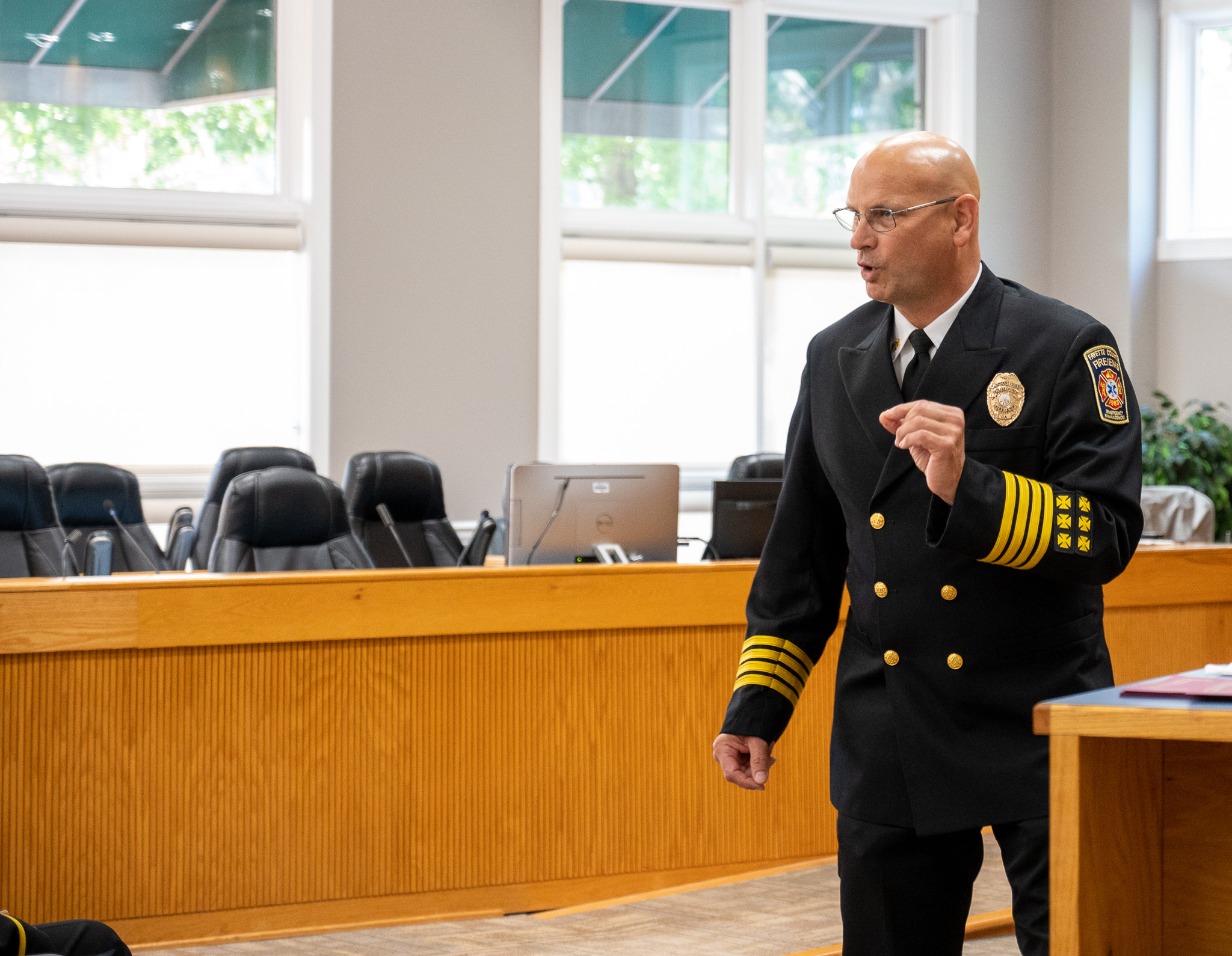
The phone call came in October 2008, and it was brief. Pete Nelms, then Scott Roberts’ boss at Fayette County Fire and Emergency Services, told him that beginning Monday he would be working with the recruit classes. Roberts was given a three-ring binder at the old Station 8 and a single piece of reassurance: Everything he needed was inside.
The phone call came in October 2008, and it was brief. Pete Nelms, then Scott Roberts’ boss at Fayette County Fire and Emergency Services, told him that beginning Monday he would be working with the recruit classes. Roberts was given a three-ring binder at the old Station 8 and a single piece of reassurance: Everything he needed was inside.
There was a complication. A class was already in progress. “It felt like it was an overnight change,” Roberts said. He took the binder, got his feet wet, and, as he puts it, built upon it.
That was the beginning of the second act of a career that began in July 1992, when Roberts joined the department. He spent 14 years as a firefighter and paramedic, then two as an emergency management specialist with the rank of lieutenant, a job he went after for reasons that had little to do with ambition and a great deal to do with arithmetic. He loved running calls, and he still does. But a call, he explained, is a single patient. He wanted a job that could reach more people.
“It sticks with me that I had a vision,” Roberts said. “I just wanted the opportunity to do something different.”
The opportunity, as it turned out, was to teach. Roberts rose to captain in the Training Division and then to Assistant
Chief for Administration and EMS director, the post he has held until now. Over the years, the department has put roughly 20 recruits a year through its classes, which adds up to something like 400 new firefighters and EMS providers. Roberts has had a hand in most of them. He is, by any reasonable accounting, a man who has shaped the people who answer the door when Fayette County calls 911.
Chief for Administration and EMS director, the post he has held until now. Over the years, the department has put roughly 20 recruits a year through its classes, which adds up to something like 400 new firefighters and EMS providers. Roberts has had a hand in most of them. He is, by any reasonable accounting, a man who has shaped the people who answer the door when Fayette County calls 911.
He is quick to say that the education began elsewhere. “There is no replacement for experience,” he said. “You truly learn something different from every call. Gaining that experience over the years built me and gave me the ability to train others.”
A Building, Eventually
For a long time, the training division made do. Classes were taught out of Station 11 and out of a trailer. Then, after five years of planning, with Roberts on the planning team, the Fayette County Fire and EMS Training Center opened as a regional facility. Asked what he is proudest of, he named it first. “Being on the planning team and getting it open to be a regional training center,” he said, “meant a lot.”
The second thing he named was blood.
The department’s pre-hospital transfusion program became operational on Aug. 25, 2025. Two units, Squad 2 and Squad 10, now carry blood products that paramedics can administer at the scene. Transport times to the nearest trauma centers run 30 to 45 minutes, and for a critically injured patient, that interval is the whole argument. Fayette was the first department in Georgia EMS Region 4, a 12-county area, to adopt the practice, and it remains one of only a handful of agencies in the state to offer it.
Roberts credits the people who made room for it: Fire Chief Jeffrey Hill, County Administrator Steve Rapson, and the Board of Commissioners. “It is making a huge difference in people’s lives,” he said.
Lessons From the Chiefs
Roberts has served under every fire chief in the department’s modern history except the first, and he talks about them the way some people talk about teachers. Of Chief Folden, he said: “It wasn’t that he was my boss. He was well respected in the state, and working side by side with him for so many years helped develop me to where I am. It provided me with a lot of knowledge and wisdom.”
“Scott was a fantastic educator and leader. I am so proud of the medical and training advances that have been made under his leadership. He has been a tireless advocate for personal and professional advancement regardless of the position he occupied. I am personally grateful for his dedication, strong work ethic, knowledge, and friendship during our careers,” Folden said.
He has tried to repay the debt. With Folden retired, Roberts now works alongside Capt. Anderson in much the same way. “We are a team,” he said. “I’ve been able to emulate what I learned all those years and pass it on to a person who was working beside me.”
"Assistant Chief Scott Roberts has been a mentor and guiding force throughout my career, from teaching my recruit class to trusting me with the responsibility of the training division he built," Captain Jason Anderson said. "His dedication to the citizens of Fayette County and his commitment to upholding the high standards our county is known for continue to shape our department and strengthen the service we provide to our community. It has been a privilege to work alongside him. His influence will continue to shape the department for years to come.
Of Chief Hill, he spoke with the particular warmth of a man describing a boss who leads well. “He empowers those below him,” Roberts said. “He gives us the ability to run our divisions with little supervision. I appreciate him trusting me to lead in this division, and I’m proud of what we have done together for this organization.”
Honors, and the One That Counted
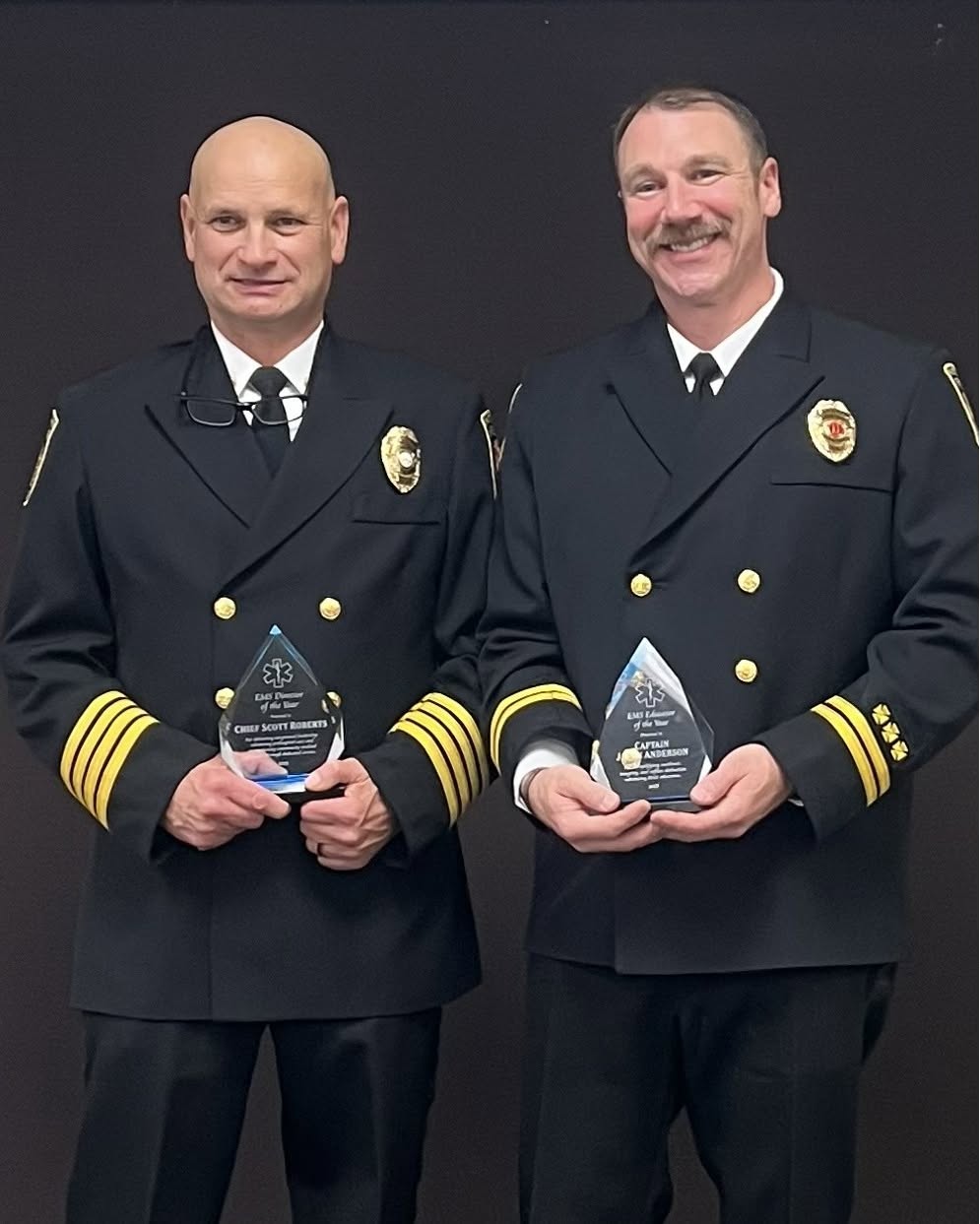
In February 2026, Region 4 EMS, which operates under the Georgia Department of Public Health, named Roberts its EMS Director of the Year. The regional award, he said, meant the most, and the reason is the sort of detail that tends to get lost in a plaque. The other EMS directors in the region chose him. “The other directors in the region selected me for that,” he said.
He came to the work with formal training to match the practical kind: an associate degree in emergency management from Central Georgia Technical College, completed in 2009; a bachelor’s degree in public safety from Mercer University in 2012; and a master’s degree in public safety leadership from Mercer in 2014.
What Rank Is For
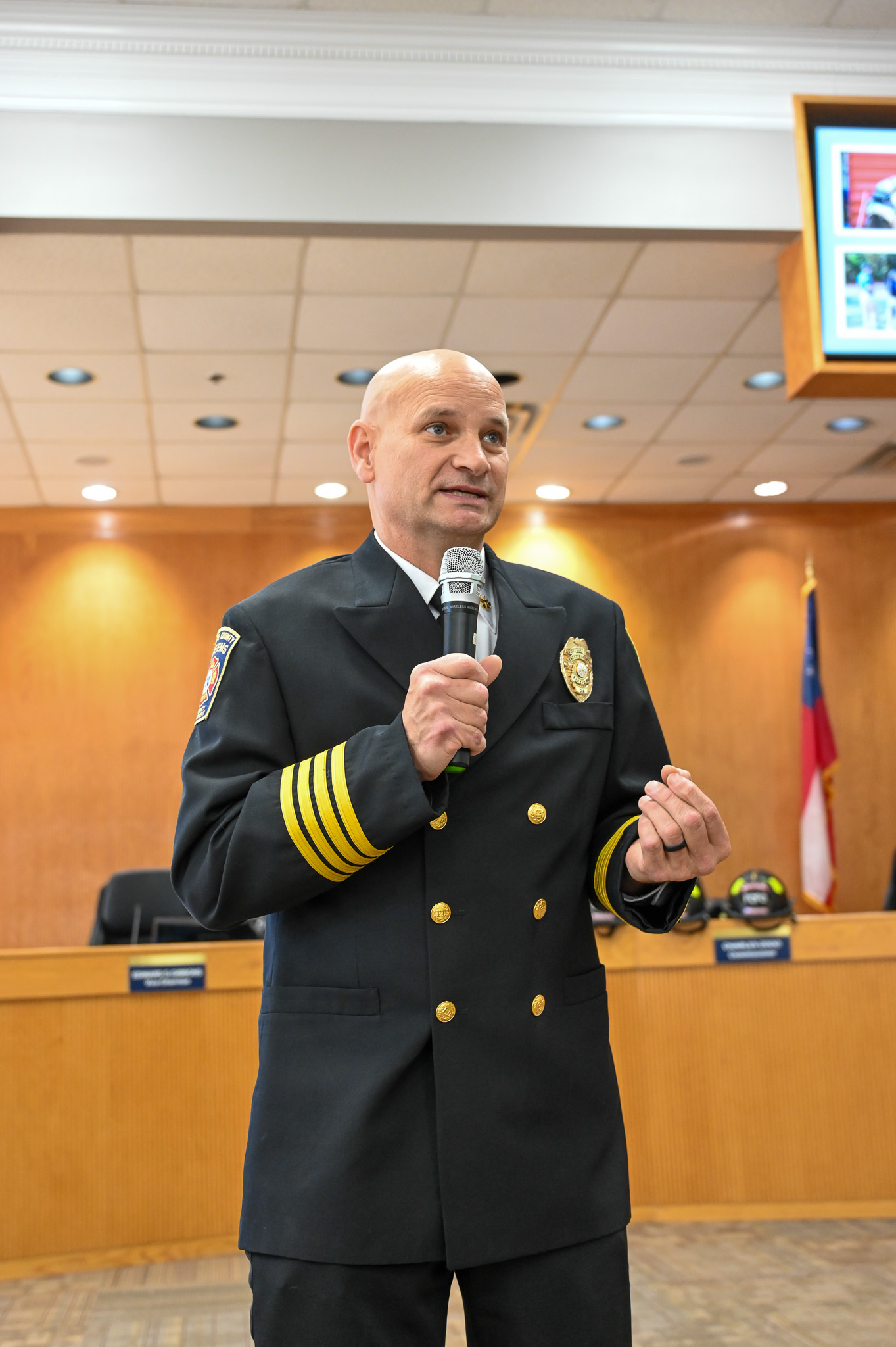
Asked for advice for younger firefighters, Roberts did not start with tactics. He started with a question. “What is rank? It’s about the people. We do not lead in a vacuum. Look at the bigger picture, the people we serve.” Leadership, in his telling, is earned rather than assigned, and it is built from integrity, confidence, and a willingness to go first. “It’s about having an influence,” he said, “so people don’t do something because they have to. They do something because they want to.”
He applies the same philosophy to public speaking, which he does often and, by his own account, with a great deal of preparation. What gets him to the podium, he said, is passion for the people he represents, then preparation, then coursework, including a public information officer course that helped, and finally experience.
The Torch
When the conversation turned to legacy, Roberts moved quickly past buildings and programs. “It’s the people wearing the uniforms on our streets who represent what we have built,” he said. He described the long chain of chiefs who set the foundation, the administrators who followed, and the staff who spot a need, build a program, or change a policy, and then watch crews put it into action on the street and make a difference for residents.
“I am confident that we built a department and have things in place during my tenure as assistant chief that I can say I am comfortable passing the torch to the next person,” he said. “The organization is poised and capable of handling the challenges they may face.”
As for what comes next, Roberts said he wants to dedicate more time to his beloved wife, children, and family. What he will miss is easier to say. “All the staff, the citizens,” he said. “A great group of people to work alongside.”
The binder from Station 8 is long since filled. Roberts expects the next one to be in good hands.